How does it work?
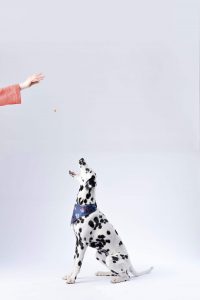 The idea is simple. We create an association between a “click” and a treat. We click and immediately treat, we click and treat. We repeat this dozens of times and the dog realizes “ok , when I hear this sound, I get a good thing”. Now, when this association is made, we can use this click to deliver information to the dog about his behavior. We will click the clicker the instant a behavior we want occurs. The dog sits, we click immediately when the dog’s behind hits the ground and deliver the reinforcer right after – the dog realizes “ok – putting my behind on the ground is good”. The clicker eliminates the need to deliver the treat as fast as possible. It allows for a gap or bridge between the behavior and the reinforcer.
It is important to note that once the association is established, it is important that every click is always followed by a treat. If you click and you do not treat, you weaken the association. Also note, that the reinforcer does not have to be food. Many dogs would love to work for a game of tug, or a Frisbee throw. The reinforcer that comes after the click can be anything the dog wants at the moment and it is important to know your dog and what he loves. Some dogs will work for food indoors, while outdoors they would much rather chase a tennis ball.
The best example for the success of this method
Marine mammals’ trainers have been using this method for years. Most of the training you see in places like sea world is done with clicker training. The trainers use whistles instead of clickers but the concept is the same. The trainer needs to teach a dolphin that performing a summersault in the middle of the pool is a good thing. As far as timing is concerned, the trainer cannot deliver the reinforcer (a fish) right when the dolphin is jumping. the dolphin needs to swim to the trainer to get his fish. Hence, by creating an association between the whistle and the treat (fish), the trainer can whistle right when the summersault is being performed, the dolphin knows that he did something that gets him a fish, and swims to get it.
Do we have to use a clicker?
Not really; you can use any distinct sound that you will not use anywhere else. You can also use words although they are less distinct – words can be said in different tones, and we also use them in sentences – a fact that can weaken the association without us paying attention to it. The clicker’s advantage is that it provides a very distinct sound that is rarely if ever heard in any other circumstance other than training.