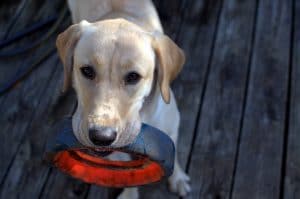
 Most dog owners have experienced the loss of a valuable object to their dog’s curious mouth at one point or another. If you have a dog for years, chances are this will happen to you as well. Dogs chew things; this is why they have a mouth. They chew because their mouth is their tool to doing almost everything – eating, exploring, grabbing, carrying, etc. asking a dog not to chew is like asking a baby stop taking everything in his/her hand. it is an illogical and unrealistic request. What we must try to do is tell the dog what he can chew and what he cannot chew.
If you have reached this page after reading this book from the beginning, you know that prevention will play a key role in managing destructive chewing. By preventing the puppy from getting to objects that we do not want him/her to chew, and at the same time, by allowing an enriched environment in which objects to chew on are fun and plentiful, we will help our puppy grow without ever enjoying to taste of our couch, shoe, sock, cell phone, etc.
I have mentioned in the introduction that humans are very good at prevention. We do it with our babies in various ways (putting them in a cradle, covering electrical outlets, etc.), we do it for our safety by putting locks on, installing safes, and installing alarm systems, and quite frankly, we do it in all the ways of life. If we fail to do it with our dogs, we fail to apply a concept we use very well everywhere else and this would be unintelligent of us.
 You cannot blame a dog from chewing through an open garbage can you left in the kitchen, tearing socks that were left outside the laundry basket, or grabbing leftovers that were left on the kitchen counter. Dogs are opportunistic and they try to get everything that benefits them. Many times we can prevent destructive chewing by simple measures such as closing doors behind us, putting our valuables in closed closets, or hiding the garbage can. In addition, using a crate, as described in the previous section, can be a great prevention tool, especially for times that you simply want to stop worrying for a few hours. If, however, our puppy is running around in the house, it is our job to supervise him/her and never let her disappear to a place we cannot stop her from getting into trouble. Prevention alone, however, will not solve our destructive chewing problem. Prevention only tells the puppy what not to do. Now, we should couple it with methods of telling the puppy what he/she should do. Since chewing is a normal dog behavior, we should accommodate for it and give the dog plenty of outlets of engaging in this behavior. We do that by letting the chew on toys and bones as much as he/she wants. The more experience the puppy has with chewing on “his/her” stuff, and the less experience the puppy has with chewing on our valuables, the greater the chances the puppy will never develop destructive chewing.
There will be a time that you will fail to supervise or crate your puppy and you will find him arriving with a sock in his mouth. If this happens, try to convince your dog to deliver the object to you in exchange for a treat. When he/she does, take the object, put it away, and give back one of the puppy’s toys instead. Do not start chasing the puppy angrily. Dogs love to play chase and they will find your chasing reinforcing. By consistently behaving this way, you will also set the foundations for future games of ‘catch’.
Step by Step:
- Buy plenty of chew toys, KONG™ toys, bones, and ropes, which fit your puppy’s size and age. Consult your veterinarian regarding dangerous and safe objects for your dog.
- Puppy-proof your house. Walk around your house and find things that can set your puppy for failure: block access to electrical wires, find a garbage can with a secure lead, put valuables in out of reach locations, etc.
- Always supervise your puppy when you are in the house. If you see him chewing on a piece of furniture, say “no” and direct his/her attention to one of the chew toys you have bought in advance.
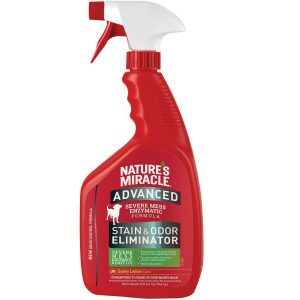
- You can buy special products that have a dog repelling odor. You can smear or spray these products on legs of furniture and other objects your puppy might find attractive to chew on. At the same time, make sure the dog’s legitimate chew toys are smeared with attractive smells like peanut butter or liver paste.
- Never leave the puppy alone in a location he/she can cause damage in. if you do so, you set your puppy up for failure and we try to avoid that at all cost. Leave the dog in the crate or in a dog proof room with several attractive chew toys and bones.
- Never leave the dog tied when you are away. This can be dangerous and cause harm to your dog.
- There are many modern dog toys that serve as puzzles. You fill those toys with treats and the dog needs to manipulate the toy in order to get to the treats. These types of toys can be of great help when trying to attract the dog’s attention away from objects he/she can cause harm to.
- Avoiding getting angry, yelling, and punishing your puppy. These feelings / actions usually do more harm than good. Be patient and continue your training program. Remember that your puppy does not do anything on purpose and that a table’s leg is no different than a chew toy.