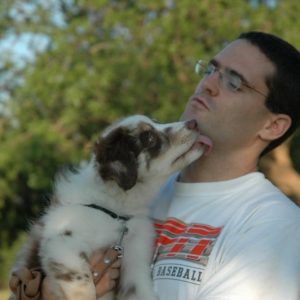
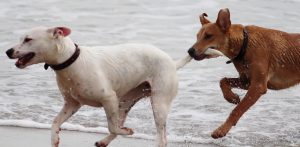
 Dogs use their mouths. It is their tool for doing almost everything. The sooner we realize that, the sooner we are able to accept it and understand how to manage it. As puppies grow up they experiment with their mouths. They bite, play, and taste everything they can. It is our job to control and direct their mouth usage into acceptable forms.
Many dog owners claim that their dog will never bite. This statement is almost always false. Every dog with teeth can bite even if he never did before. Can you honestly say that you will never hit another person? If you are honest, the answer should be no. theoretically, there could be a situation in which even the calmest human being will have to use some form of violence. The difference among individuals is the threshold of reverting to violence. Some individuals have a very low violence threshold and they explode with every little irritation and some have a very high threshold and it would take a lot to get them to revert to violence. Our dogs are the same; some dogs revert to biting easily – they have a very low threshold for irritations. Some, on the other hand, have a high threshold, and they need to feel extremely threatened before using their mouths. Remember, there is never 100% in behavior. You can never say that a dog always bites or that a dog never bites.
 Socialization and handling (as described previously) are important prerequisites for bite inhibition. A dog that is used to handling and is well socialized will have a higher threshold for biting in the first place. Combining socialization, handling, and the specific work on bite inhibition described ahead will further decrease the chances of rough mouthing and biting.
The first thing we need to work on is the control over bite strength. Puppy play is one way bite strength is learned. While playing with littermates, a puppy that bites too hard will be answered by a yelp of the other puppy and a cessation of the play session (the other puppy will leave). Over time, this teaches the puppy to control the strength of his bite. Owners should do the same. While playing with your puppy yelp in pain (yell ouch) and leave the room for about 30 seconds every time the puppy is biting you too hard. Gradually, you can increase the requirements from your pup: start yelling and leaving even when the bite is weaker. Your job is to teach the puppy that human skin is the tenderest organ on the face of the earth and that biting human skin results in the end of fun and play.
When the puppy is very careful with his mouth but still tends to use it on human skin from time to time, start working on inhibiting the bite. Now, no contact between teeth and skin is allowed. The second the puppy’s teeth touch the skin, yelp and go away. Sometimes, your puppy will be rather stubborn and will follow you when you leave trying to keep playing. In this case, you can remove the puppy from the room. This is called a “time out” – the puppy’s needs is the social play – the second he mouths you, the social play ends and he finds himself alone for 30 seconds.
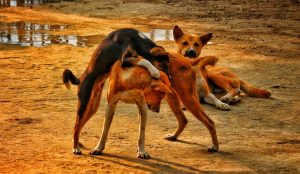 This should be done in a very matter of fact way and without punishing the puppy. We are simply telling the dog that our skin is sensitive and that we will stop playing every time it hurts us. The cessation of play is punishment enough. In addition, after the short time out the owner must approach the dog in a very friendly way to either continue play or to pet and express happiness. We don’t want to teach our puppy that we are grudge holding dangerous people.
Step by Step:
- Start this exercise when your puppy is relatively calm.
- Pet the puppy and initiate a gentle game. (most puppies will start opening their mouths and start nibbling on your hand)
- When you feel the teeth hurting your skin, yelp loudly and immediately move away from the puppy ignoring him.
- Spend for 15-30 seconds ignoring your puppy – do not say anything and do not make eye contact.
- Go back to your puppy and start playing gently again.
- Repeat steps 2-4 many times and gradually yelp and move away with gentler biting.
- Do this exercise for five minutes at a time. After the training session ends, pet your puppy, give him some treats, and continue your daily routine.
- Make sure this exercise is being done by everyone in the household (except babies and children). Try to enlist friends to this exercise routine so the puppy learns to generalize the concept of bite inhibition.
- If your children are up for this exercise, let them try it while supervising and directing the exercise. If your children are too little and cannot understand the concept of this exercise – avoid letting them try it.
Caution: Children and babies should never be left alone with a dog or a puppy.